Why the Trump-Harvard Battle?
Last weekend I watched The Return to the Hiding Place, a film tracing college students’ role in the Dutch Resistance during World War II. The movie contains a powerful scene in which a German officer confronts and threatens the student body president. The Nazi’s dictum struck a chord: “As goes the will of the students, so goes the will of the nation.” The film reminded me that the battle for our students’ minds has tremendous, far-reaching implications.
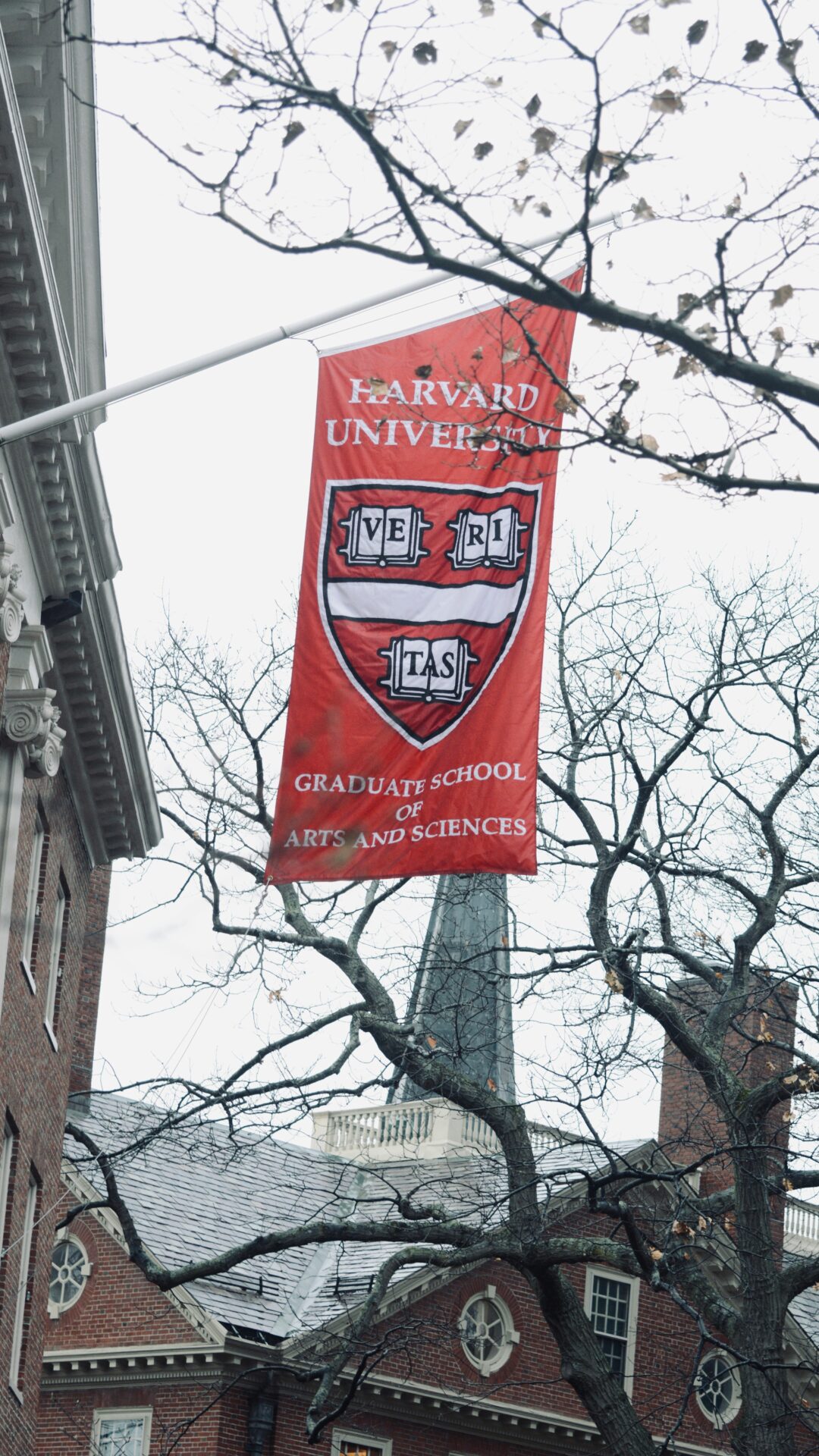
In this light, I have observed the Trump administration’s actions against Harvard University in this week’s news. Each day, there seems to be a new development in the fight for federal funding. Many are wondering why the administration has focused so much attention on Harvard.
The administration’s efforts seem like a top-down strategy at broader education reforms. Harvard is one of our nation’s oldest institutions, and the university formerly represented the gold standard in American education. The accomplishments of Harvard’s graduates over its nearly four-century history are quite impressive: eight presidents, twenty-three Supreme Court justices, 150 Nobel Prize winners, and numerous significant cultural figures. The university’s resources are unparalleled; the endowment is valued at $53.2 billion, the largest in the world.
However, the university’s legacy has become tarnished and profoundly problematic, which I will articulate below. Since virtually no other institution in America influences collegiate policies, culture, and values as much as Harvard, the Trump administration has devoted its efforts to reforming higher education from the top down.
Here are the key factors at play that affect Harvard’s reputation among both politicians and academics:
- Harvard’s DEI policies remain a driving force at the university. In 2022, the Supreme Court struck down Harvard’s affirmative action policies in the landmark case Students for Fair Admissions v. Harvard, and the college has recently renamed its Office of Diversity, Equity, and Inclusion the Office of Equity, Diversity, Inclusion, and Belonging to the Office of Community and Campus Life, but it is unclear whether this change is substantive or cosmetic. The administration does not seem convinced that Harvard has satisfactorily removed its discriminatory policies or practices.
- Free speech on Harvard’s campus was rated “abysmal” in the 2025 College Free Speech Rankings. Of the 251 schools studied, Harvard ranked in last place. Even President Alan Garber recognized that “viewpoint diversity” is a huge problem on Harvard’s campus. Conservatives form a minority in both the faculty and student populations, and testimonies cited in the report above suggest that they perceive their viewpoints as unwelcome.
- The declining academic ability of its students is shocking. Last fall, the Harvard Crimson reported that the university is “rectifying a lack of foundational algebra skills among students.” It is difficult to conceive that an institution with a 3.2% acceptance rate must remediate students’ algebra skills.
- Related to declining academics, plagiarism has become a blight on Harvard’s reputation. The immediate past president, Claudine Gay, resigned amid her handling of the antisemitism on campus and the rampant reports of plagiarism in her academic work. Just this week, and for the first time since the 1940s, the university fired a tenured professor, Francesca Gino. Gino, who makes over $1 million annually, has allegedly fabricated data in her studies to support her hypotheses. These revelations have created serious concerns about the integrity of modern scholarship.
- Harvard has become a haven for anti-Semitic and pro-Communist students, many of whom are international. The administration’s revocation of the SEVP certification, allowing international students, will significantly affect the university. But according to a press release on May 22 issued by the Department of Homeland Security, Secretary Noem noted, “Harvard’s leadership has created an unsafe campus environment by permitting anti-American, pro-terrorist agitators to harass and physically assault individuals, including many Jewish students, and otherwise obstruct its once-venerable learning environment. Many of these agitators are foreign students. Harvard’s leadership further facilitated, and engaged in coordinated activity with the CCP, including hosting and training members of a CCP paramilitary group complicit in the Uyghur genocide.” By revoking the SEVP certification, international students can no longer attend Harvard legally.
Each of these issues is pervasive across higher education in varying degrees. Over the past forty years, affirmative action has replaced a meritocracy. Free speech and conservative viewpoints are unwelcome. Academic standards have fallen. Plagiarism and other ethical problems are pervasive. Antisemitism is rampant across the country’s colleges. Harvard is not isolated on these fronts.
From my perspective, the Trump administration’s actions are meant to thwart the institutional threats to American ingenuity and greatness in higher education, starting with the most influential institution. These legal and financial actions are causing other institutions to tighten their ropes. In fact, according to a Time report, “Some colleges and universities are also implementing policy changes to proactively avoid Trump’s ire.”
The administration’s actions may create a much-needed “great reset” in higher education that refines the American educational system and opens opportunities for new colleges to step into the vacuum left by failing institutions.